
RS11, or Rainbow Sherbert #11, was developed by Doja Pak working with Deep East Oakland and Wizard Trees, built out of OZ Kush seed and selected for sweet, fruit-forward expression. Doja Pak describe it as OZK and Pink Guava crossed with Black Sherb.

It is the parent behind two of our own cultivars, and the two could hardly be less alike — which makes RS11 the clearest illustration in our catalogue of what a pheno hunt actually does.
RS11 at a Glance
| Attribute | Detail |
|---|---|
| Genetics | OZK × Pink Guava, crossed with Black Sherb (per Doja Pak) |
| Breeders | Doja Pak, with Deep East Oakland and Wizard Trees |
| Also known as | Rainbow Sherbert #11 |
| Line | Rainbow Sherbert, from OZ Kush |
| Aroma | Sweet fruit with a fuel undertone |
| Resin | Exceptional |
| Reputation | Connoisseur-grade, heavily hyped |
| Lost Leaf descendants | Sarcophagos and Starbury |
The OZ Kush Line
The Rainbow Sherbert line came out of a pack of OZ Kush seeds obtained from Dying Breed Seeds. Deep East Oakland and Wizard Trees grew them out and selected several distinct expressions, each numbered.
OZK is itself Eddy OG crossed with Zkittlez, so there is Z heritage running through RS11 — which is part of why it crosses so readily into candy-forward lines.
Pink Guava came from backcrossing OZK to emphasise the sweet, fruity elements. Black Sherb added depth and colour. The result is a cultivar that reads sweet without being simple.
Beard Bros Pharms cover the wider Rainbow Sherbert family in their strain journalism archive, which is a useful counterweight to breeder marketing copy.
| Component | Origin | Contributes |
|---|---|---|
| OZ Kush (OZK) | Eddy OG × Zkittlez | Fuel backbone with candy undertone |
| Pink Guava | OZK backcross by DEO | Sweet fruit emphasis |
| Black Sherb | Sherbert line | Depth and colour |
| RS11 | The selection | Sweet fuel with exceptional resin |
Numbered Selections
The #11 designation works the same way Gelato’s numbers do. It marks one specific plant kept from a large hunt, not a marketing variation.
That convention exists because a single cross produces genuinely different plants. Numbering lets breeders distribute a specific expression rather than a lottery ticket.
It is also why our own Sarcophagos and Starbury carry different names despite coming from identical seed packs.
A strain name tells you the cross. A number tells you which plant.
Why RS11 Got Hyped
RS11 arrived during the period when resin quality became the primary marker of premium flower, driven largely by the growth of solventless extraction.
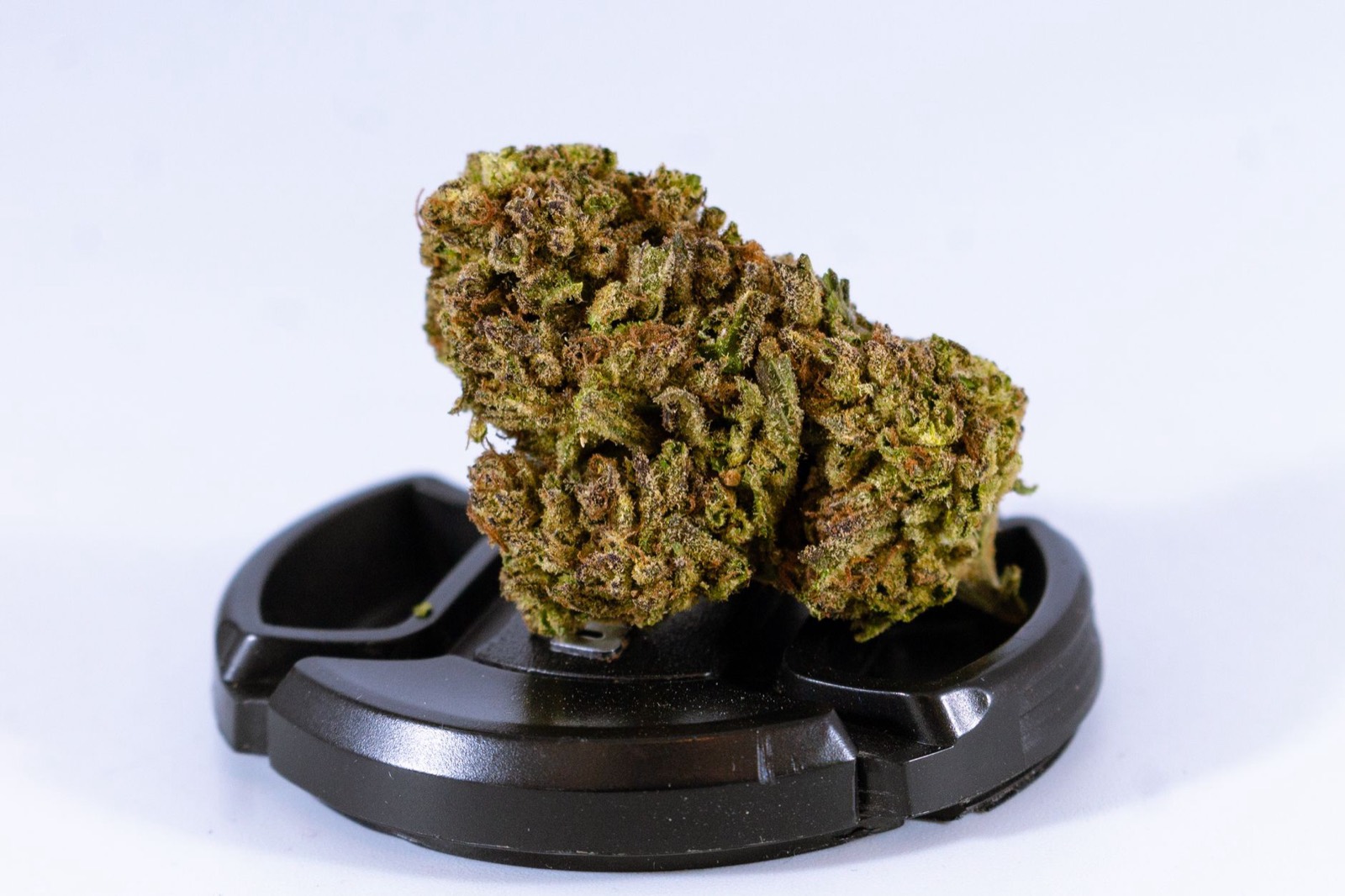
It produces enormous quantities of high-quality trichomes, which made it valuable to hash makers as well as flower buyers. Cultivars that serve both markets command attention.
Our guide to solventless hash and rosin covers why resin quality matters so much to extractors, and what separates a good hash cultivar from a merely potent one.
- Exceptional resin — valuable for flower and extraction alike.
- Sweet fuel profile — distinctive without being polarising.
- Strong colour — commercial appeal from the Sherb side.
- Breeding utility — crosses well into candy and gas lines.
RS11 in Our Catalogue
We crossed RS11 with Coffin Candy from Duke of Erb and hunted the result. Two plants were worth keeping, and they went in opposite directions.
Sarcophagos took nearly all of the RS11 fuel character and arrives fast. Starbury took almost none of it, leading with strawberry candy and landing as a delayed creeper.
Same packs, same room, same people selecting. That divergence is the single best argument we can offer for hunting seed rather than buying a proven clone.
| Sarcophagos | Starbury | |
|---|---|---|
| Lead note | Sour gas | Strawberry Z |
| Backend | Smarties candy | Smarties candy |
| Onset | Fast | Delayed creeper |
| RS11 fuel character | Nearly all of it | Almost none |
| Suits | Gas chasers | Patient consumers |
Reading an RS Pedigree
When RS11 appears as a parent, it tells you three fairly reliable things about the offspring.
There will be resin, and probably more than the other parent would produce alone. There will be sweet fruit somewhere in the profile even if fuel leads. And the plant will need careful handling at trim, because greasy cultivars shed trichomes.
What it does not tell you is which direction the flavour will go. Our own hunt produced one gas-forward plant and one candy-forward plant from identical seed, which is about as clear a demonstration as possible that lineage sets a range rather than an outcome.
Growing RS-Line Genetics
RS11 descendants are resin factories, and everything that makes them desirable also makes them high-maintenance.
Dense sticky flower needs constant airflow, trichome loss at trim is a real cost, and gas expression fades fast if the plant is pushed late. Our grow room climate guide and harvest and cure walkthrough cover the specifics.
- Airflow first. Sticky dense flower in still air invites botrytis.
- Hand-trim. Machine trimming strips resin from cultivars this greasy.
- Feed conservatively late. Fuel notes go first when pushed.
- Dry slowly. Sweet fuel is volatile and a fast dry removes it.
Hype and Its Costs
RS11 is one of the most hyped cultivars of recent years, and hype has consequences beyond price.

It encourages growers to run it whether or not it suits their room, and it encourages mislabelling, because a name that sells gets applied to flower that does not deserve it. Neither helps the cultivar’s reputation.
The underlying genetics are genuinely good. What surrounds them is a market doing what markets do to anything scarce and fashionable.
| Effect of hype | Consequence for buyers |
|---|---|
| Name applied loosely | Flower with distant RS heritage sold as RS11 |
| Price premium | Paying for a name rather than execution |
| Widely grown | Quality varies enormously between producers |
| Marketing over method | Harvest date and cure quality overlooked |
Buying RS11
RS11 is hyped enough that the name gets applied loosely, and plenty of flower sold under it carries only distant RS heritage.
Ask which cut, ask who grew it, and ask about the terpene profile. Our craft cannabis buyer’s guide covers the questions that separate real from nominal.

Harvest date matters more here than on most cultivars, because the sweet fuel profile is volatile and a six-month-old jar of RS11 reads considerably duller than a fresh one.
Frequently Asked Questions
What is RS11?
RS11, or Rainbow Sherbert #11, is a Doja Pak cultivar developed with Deep East Oakland and Wizard Trees from the OZ Kush line.
What are RS11 genetics?
Doja Pak describe it as OZK and Pink Guava crossed with Black Sherb. OZK is itself Eddy OG crossed with Zkittlez.
Why is it numbered 11?
The number marks one specific selected plant from a large seed hunt, in the same way Gelato phenotypes are numbered.
What does RS11 smell like?
Sweet fruit with a fuel undertone, backed by exceptional resin production.
What Lost Leaf strains come from RS11?
Sarcophagos and Starbury, both from the same RS11 x Coffin Candy hunt. They express in opposite directions.
Educational content for adults 21+ in legal jurisdictions. Lost Leaf flower is available only through licensed Michigan provisioning centres.