
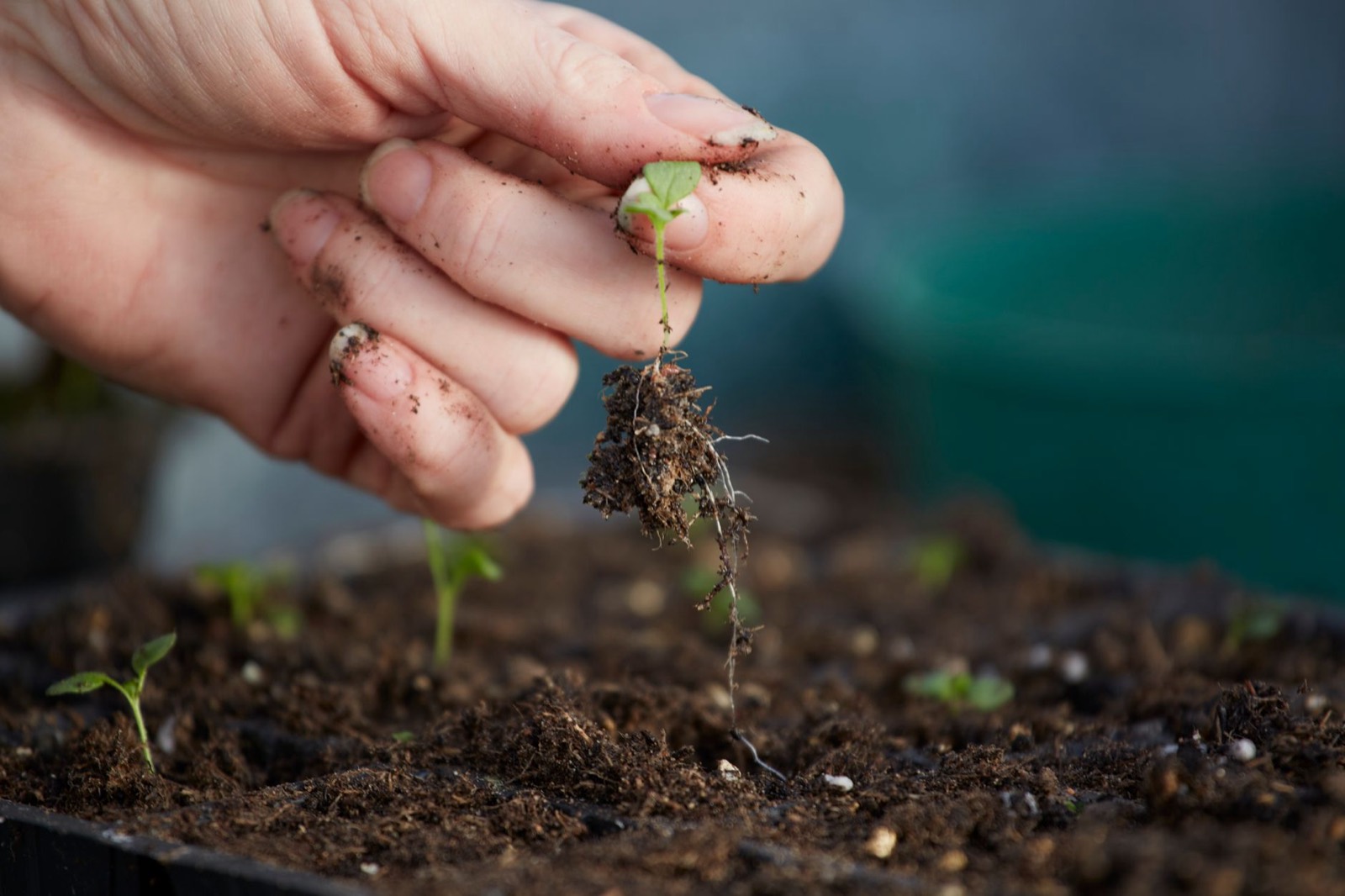
Cannabis needs nitrogen-heavy feed in vegetative growth (around 3-1-2 NPK) and shifts to phosphorus and potassium in flower (around 1-3-4), running roughly 400–800 PPM in veg and peaking near 1,000–1,400 PPM in mid flower. Root-zone pH should sit at 6.0–6.8 in soil and 5.5–6.2 in coco or hydro.
That last number matters more than any product on the shelf. A large share of what growers diagnose as a deficiency is actually pH lockout — the nutrient is present, the plant simply cannot take it up.
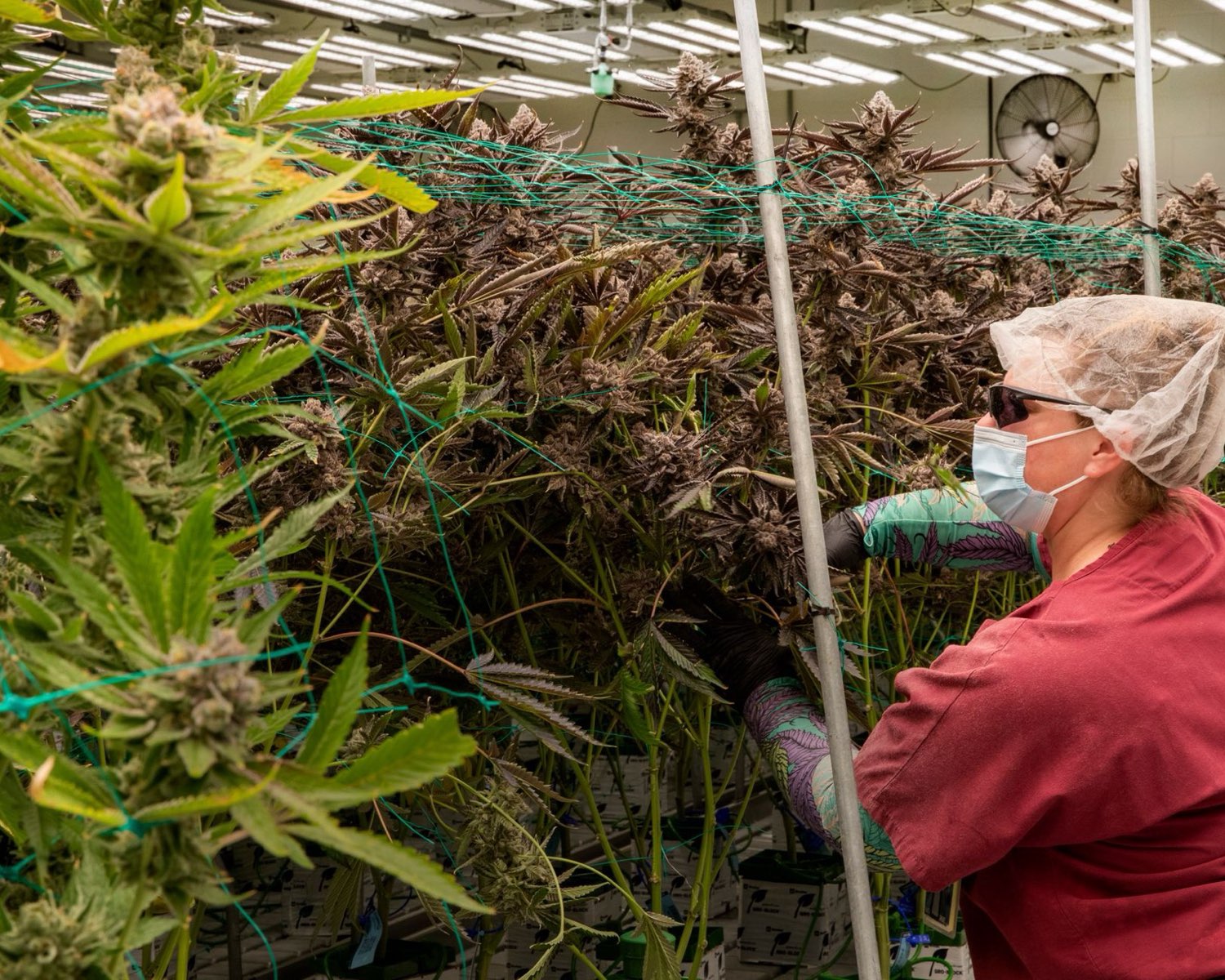
NPK by Growth Stage
| Stage | Approx. NPK ratio | Target PPM | Priority |
|---|---|---|---|
| Seedling | 1-1-1 (quarter strength) | 100–250 | Root establishment |
| Early veg | 3-1-2 | 400–600 | Nitrogen for leaf mass |
| Late veg | 3-1-2 | 600–800 | Structure before the flip |
| Transition | 2-2-2 | 700–900 | Easing nitrogen down |
| Early flower | 1-2-3 | 900–1,100 | Phosphorus for bud set |
| Mid flower | 1-3-4 | 1,000–1,400 | P and K for density |
| Late flower | 0-2-3 tapering | 600–900 | Finishing clean |
Treat these as a starting point, not gospel. Cultivar, medium, light intensity and room temperature all shift the numbers. A plant under heavy LED light in a warm room eats more than the same cutting in a cooler, dimmer space.
Check pH Before You Change Anything
This is the single most useful habit a new grower can build. Before adding anything to fix a suspected deficiency, measure your root-zone pH.
| Medium | Target pH | What happens outside the window |
|---|---|---|
| Soil | 6.0–6.8 | Iron, manganese and phosphorus lock out first |
| Coco coir | 5.5–6.2 | Calcium and magnesium issues appear rapidly |
| Hydroponic | 5.5–6.2 | Broad lockout, fast onset |
Purdue University’s horticulture department publishes broadly applicable research on plant nutrition and controlled-environment crop production if you want the underlying agronomy.
Deficiency Symptom Chart
Work top to bottom on the plant. Mobile nutrients show symptoms on old growth first; immobile ones appear on new growth.
| Nutrient | Where it appears | What it looks like | First action |
|---|---|---|---|
| Nitrogen | Older, lower leaves | Uniform yellowing moving upward | Increase N; check pH |
| Phosphorus | Older leaves | Dark, purple-tinged leaves, stunted growth | Lower pH to 6.0–6.3; check roots |
| Potassium | Older leaves | Brown spots, scorched leaf margins | Reduce overall EC; add K |
| Calcium | New growth | Rusty spots, distorted new leaves | CalMag; check coco buffering |
| Magnesium | Older leaves | Interveinal yellowing, veins stay green | CalMag; verify pH |
| Iron | New growth | Interveinal chlorosis on young leaves | Lower pH before adding iron |
Deficiency or lockout?
- Measure runoff or reservoir pH first.
- Measure EC / PPM — overfeeding presents like deficiency surprisingly often.
- Check root health; brown or slimy roots explain a lot of foliar symptoms.
- Only then adjust the feed, and change one variable at a time.
Overfeeding Is More Common Than Underfeeding
Nutrient burn — crispy, clawed leaf tips working inward — is what happens when growers respond to every symptom by adding more.
Salt build-up in the medium raises EC beyond what the plant can handle, which then causes lockout, which then looks like a new deficiency. The cycle is easy to enter and slow to exit.
| Symptom | Likely cause | Correction |
|---|---|---|
| Burnt, clawed leaf tips | Nutrient burn, EC too high | Flush; resume at lower strength |
| Dark green, glossy, clawing leaves | Nitrogen excess | Cut N immediately |
| Salt crust on medium surface | Accumulated salts | Flush with pH-corrected water |
| Symptoms worsening after feeding | Lockout, not deficiency | Stop adding; fix pH and EC |
Flavour Over Yield
Feeding schedules built for maximum weight and schedules built for maximum flavour are not the same schedule. This is a genuine trade-off, not marketing.
Pushing nitrogen deep into flower adds bulk but blunts terpene expression and leaves a harsher smoke. Our nutrient program was built from scratch and tuned specifically for flavour, smoothness and smokability — which means accepting less weight than the room could technically produce.
We would rather take the loss than release something that is not up to our standards.
We also grow without pesticides or sterilizers, which raises the stakes on plant health. A well-fed plant resists pressure that a stressed one does not.
Nutrients Do Not Work in Isolation
Uptake depends on transpiration, and transpiration depends on your environment. A room sitting at the wrong VPD will show nutrient symptoms no feed change can fix.
- Environment: LED grow room temperature, humidity and VPD targets determine how much the plant drinks at all.
- Propagation: rockwool versus aeroponic cloning covers feeding cuttings before roots establish.
- Canopy: topping, LST and SCROG techniques change light distribution and therefore demand.
- Finish: harvesting, drying and curing determines whether the terpenes you fed for survive.
Our full protocols — feeding schedules, ratios and the reasoning behind them — are in the Lost Leaf cannabis nutrients grow document, part of the complete cultivation guide collection.
Frequently Asked Questions
What NPK does cannabis need?
Roughly 3-1-2 in vegetative growth and 1-3-4 in mid flower. Nitrogen drives leaf and stem mass early; phosphorus and potassium drive bud density and terpene synthesis later.
What pH should cannabis nutrients be?
6.0–6.8 in soil and 5.5–6.2 in coco or hydroponics. Outside those windows nutrients lock out regardless of how much you feed.
How do I tell deficiency from nutrient burn?
Deficiency usually starts as yellowing or spotting and spreads; burn starts at leaf tips as crisping and works inward. If symptoms worsen after feeding, suspect excess rather than shortage.
What PPM should cannabis run at?
Around 400–800 PPM in vegetative growth, peaking near 1,000–1,400 in mid flower, then tapering through late flower. Adjust to cultivar and environment.
Does feeding affect flavour?
Considerably. Heavy nitrogen late in flower adds weight but reduces terpene expression and smoothness. Flavour-focused programs feed more conservatively through the back half.
Organic, Synthetic, or Both
The argument between organic and synthetic feeding generates more heat than light. Both produce excellent flower in competent hands.
| Approach | Strengths | Trade-offs |
|---|---|---|
| Synthetic / mineral | Precise control, fast correction, repeatable | Unforgiving of mistakes; salt build-up |
| Organic / living soil | Buffered, forgiving, strong flavour reputation | Slow to correct; harder to diagnose |
| Hybrid (our approach) | Hydroponic control with organic inputs | Requires understanding both systems |
We run a hybrid, combining the responsiveness of hydroponics with organic inputs. It is more work than committing to either camp, but it gives us precise control without the harshness that heavy mineral feeding can leave behind.
Start Simple
New growers routinely run four or five additives before they can reliably read a plant. That makes diagnosis nearly impossible, because when something goes wrong there is no way to isolate the cause.
- Use a single base nutrient line at manufacturer strength or below.
- Add CalMag only if your water or medium actually requires it.
- Learn to read pH and EC before adding anything else.
- Introduce one additive at a time, and only to solve an observed problem.
Educational content for adults 21+ growing legally in their jurisdiction. Check your local regulations before cultivating cannabis.
Related reading: Irrigation frequency, runoff and salt management.