
Harvest cannabis when roughly 80–90% of trichomes on the calyxes are cloudy and 10–20% have turned amber. Dry at 60–70°F and 50–60% relative humidity over 7–14 days, then cure in sealed jars at 60–65% humidity for two weeks or more.
Everything you did in the room can be undone in the last three weeks. Harvest timing sets the effect, the dry sets the smoothness, and the cure sets the flavour.
Reading Trichomes
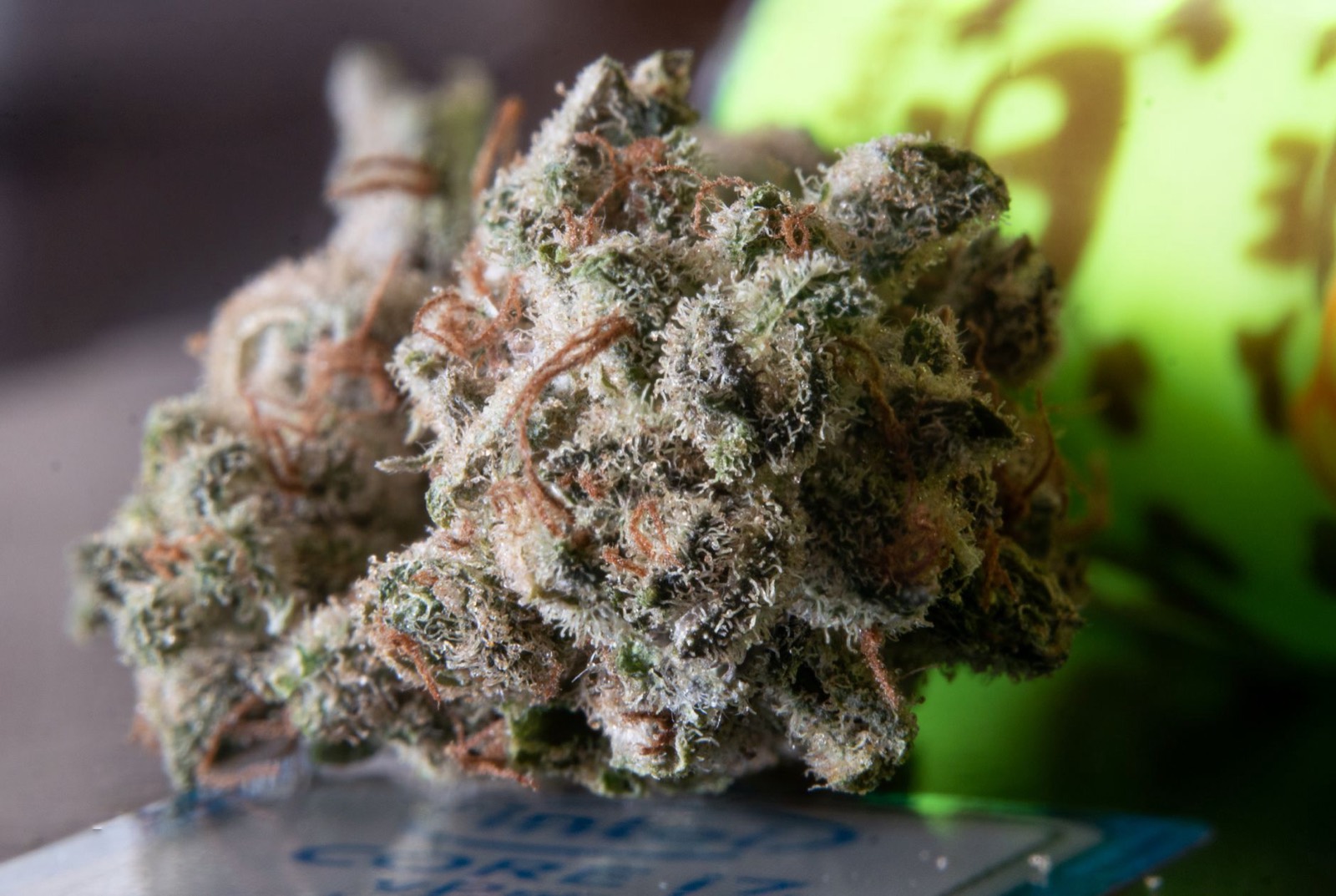
Pistils browning is a rough guide. Trichomes are the actual signal, and you need a jeweller’s loupe or a cheap USB microscope to read them properly.
Look at trichomes on the calyxes, not the sugar leaves. Sugar-leaf trichomes mature earlier and will tell you to chop too soon.
| Trichome state | What it means | Effect if harvested here |
|---|---|---|
| Clear | Immature resin, cannabinoids still developing | Weak, often unpleasant |
| Cloudy / milky | Peak cannabinoid content | Most potent, energetic, cerebral |
| Mostly cloudy, some amber | Peak with early degradation | Balanced — the usual target |
| Amber | THC degrading to CBN | Sedative, heavier body |
| Mostly amber | Well past peak | Narcotic, dulled flavour |
Choosing your window
- Cerebral, bright effect: harvest at mostly cloudy with almost no amber.
- Balanced: 80–90% cloudy, 10–20% amber. Most growers land here.
- Heavy, sedating: allow 30%+ amber.
The Dry
This is where most quality is lost. A fast, hot dry strips terpenes and leaves a harsh smoke no amount of curing will rescue.
| Parameter | Target | Why |
|---|---|---|
| Temperature | 60–70°F | Higher volatilises terpenes |
| Relative humidity | 50–60% | Lower dries the outside before the inside |
| Duration | 7–14 days | Slow and even beats fast |
| Airflow | Gentle, indirect | Direct fans on flower dry unevenly |
| Light | Complete darkness | Light degrades cannabinoids |
The stem-snap test is the traditional readiness check: smaller stems should snap rather than bend. If they bend, it needs longer.
Resist the urge to speed things up with heat or a dehumidifier set aggressively. A dry finished in four days will smoke harshly regardless of how good the flower was on the plant, and no cure fully recovers it.
Whole-plant versus bucked
Hanging whole plants slows the dry because moisture has to travel further, which is usually an advantage. Bucking branches down speeds things up and suits smaller spaces.
Wet trimming before the dry is faster and produces tidier flower. Dry trimming preserves more trichomes but takes longer and needs more room. We hand-trim, which costs time and protects resin.
Machine trimming is the obvious efficiency at scale, and it is also where a great deal of trichome damage happens. A tumbler knocks resin off flower no matter how gently it is run.
At our size that trade is easy to refuse. Everything is trimmed by hand by the owner and his wife, which is slow, and which is the point — the flower reaching the jar looks the way it looked coming off the plant.
The Cure
Curing is a slow, controlled release of remaining moisture while enzymes break down residual chlorophyll and sugars. It is what removes the grassy note from freshly dried flower, and it is the stage most often cut short by growers impatient to see the result.
- Jar at the right point. Too wet invites mould; too dry and the cure does nothing.
- Target 60–65% RH inside the jar. A small hygrometer removes the guesswork.
- Burp daily for the first two weeks. Open, let it breathe a few minutes, reseal.
- Then taper. Weekly burps once humidity stabilises.
- Keep it dark and cool. Light and heat undo the work.
| Cure stage | Duration | What changes |
|---|---|---|
| Week 1–2 | Daily burping | Moisture equalises; grassy notes fade |
| Week 2–4 | Weekly burping | Flavour sharpens and separates |
| Week 4–8 | Storage | Complexity develops; smoothness improves |
| Beyond 8 weeks | Long-term | Diminishing returns; stability is the goal |
Terpenes are volatile compounds and their retention through drying and curing is an active area of plant science research — this Frontiers in Plant Science paper covers terpene biosynthesis and behaviour in more depth.
Troubleshooting
| Problem | Cause | Fix |
|---|---|---|
| Grassy, hay-like smell | Under-cured, dried too fast | Longer cure; nothing else will fix it |
| Harsh smoke, black ash | Rushed dry or residual nutrients | Slower dry; taper feed late in flower |
| Mould in the jar | Jarred too wet | Discard affected flower; re-dry the rest |
| Flower crumbles to dust | Over-dried | Rehydrate slowly with a humidity pack |
| Smell faded after weeks | Heat or light exposure | Store cool and dark in sealed glass |
Why This Stage Decides Everything
We select every cultivar we release primarily for flavour. That selection is worthless if the finish is rushed.
Our cultivars are hunted from seed in-house and grown without pesticides or sterilizers, on a nutrient program tuned for smoothness and smokability. The dry and cure are the last chance to protect all of it — and the easiest place to lose it.
You can taste the difference on gas-forward cultivars especially. Sarcophagos loses its sour top notes to a fast dry, and Cherry Limetta needs weeks in glass before the lime sharpens properly.
The stages before this one matter too: grow room climate and VPD determines terpene development, and feeding determines how clean the flower finishes. Our full procedures are in the Lost Leaf harvesting, drying and curing grow document.
Frequently Asked Questions
When should I harvest cannabis?
When roughly 80–90% of calyx trichomes are cloudy and 10–20% have turned amber. Check calyxes rather than sugar leaves, which mature earlier.
What temperature and humidity should I dry at?
60–70°F and 50–60% relative humidity, in complete darkness with gentle indirect airflow, over 7–14 days.
How long should cannabis cure?
Two weeks minimum, though flavour continues developing for four to eight weeks. Burp jars daily for the first fortnight, then weekly.
Why does my cannabis smell like hay?
It was dried too quickly or has not cured long enough. Chlorophyll has not broken down. A longer cure is the only fix.
Should I wet trim or dry trim?
Wet trimming is faster and tidier. Dry trimming preserves more trichomes but needs more space and time. Hand-trimming either way protects resin better than machine trimming.
Storing Flower After the Cure
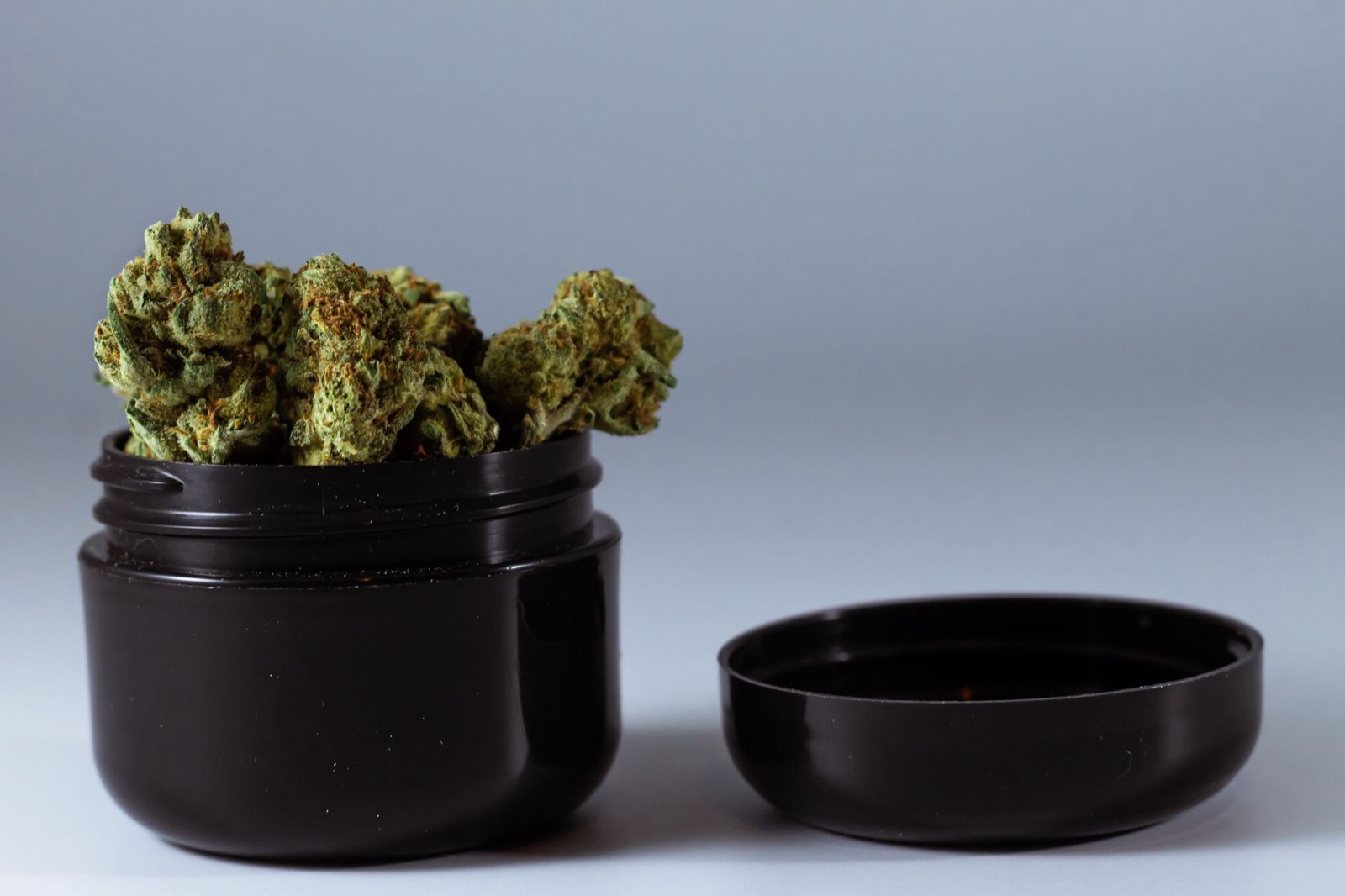
A good cure can still be undone by careless storage. Cannabinoids and terpenes degrade with exposure to light, heat, oxygen and excessive handling.
| Factor | Target | What goes wrong |
|---|---|---|
| Container | Sealed glass | Plastic leaches and holds static |
| Humidity | 58–62% RH | Too dry crumbles; too wet risks mould |
| Temperature | Cool and stable | Heat accelerates cannabinoid degradation |
| Light | Complete darkness | UV breaks down THC quickly |
| Handling | Minimal | Every touch knocks trichomes off |
Two-way humidity packs are worth using for anything kept beyond a few weeks. They hold the jar in range without the daily attention a fresh cure demands.
Educational content for adults 21+ growing legally in their jurisdiction. Check your local regulations before cultivating cannabis.
Related reading: How savoury terpene profiles age in the jar.