
Low-stress training (LST) adds roughly 20–40% yield with no cutting and almost no risk, topping adds 20–35% by creating multiple colas, and SCROG combines both to produce the highest yield per light by holding an even canopy. Defoliation supports all three but should stay under 20–30% of foliage at once.
Untrained cannabis grows one dominant cola and wastes light on everything below it. Training is simply the practice of turning one apex into many, at the same height.
The Techniques Compared
| Technique | Stress level | Typical yield gain | Difficulty | Best for |
|---|---|---|---|---|
| LST (tying down) | Low | 20–40% | Easy | Beginners, any grow size |
| Topping | High | 20–35% | Moderate | Creating multiple colas |
| FIM | High | Similar to topping | Moderate | More tops, less predictable |
| SCROG | Low (with a net) | Highest per light | Moderate | Maximising a fixed footprint |
| SOG | None | High per plant count | Easy | Many small plants, fast turnaround |
| Defoliation | Moderate | Indirect | Easy to overdo | Light penetration and airflow |
| Lollipopping | Moderate | Improves quality | Easy | Removing weak lower growth |
Low-Stress Training
LST means bending branches down and tying them in place so no single tip dominates. Nothing is cut, so there is no recovery period and effectively no risk of setting the plant back.
- Start in early vegetative growth while stems are still flexible.
- Bend the main stem gently to one side and secure it with soft plant ties.
- As side branches rise, tie them outward to keep the canopy flat.
- Adjust every few days — the plant will keep trying to reassert an apex.
- Stop adjusting once flowering stretch finishes.
If you only ever learn one technique, learn this one. It works in any medium, at any scale, and costs nothing but attention.
Topping and FIM
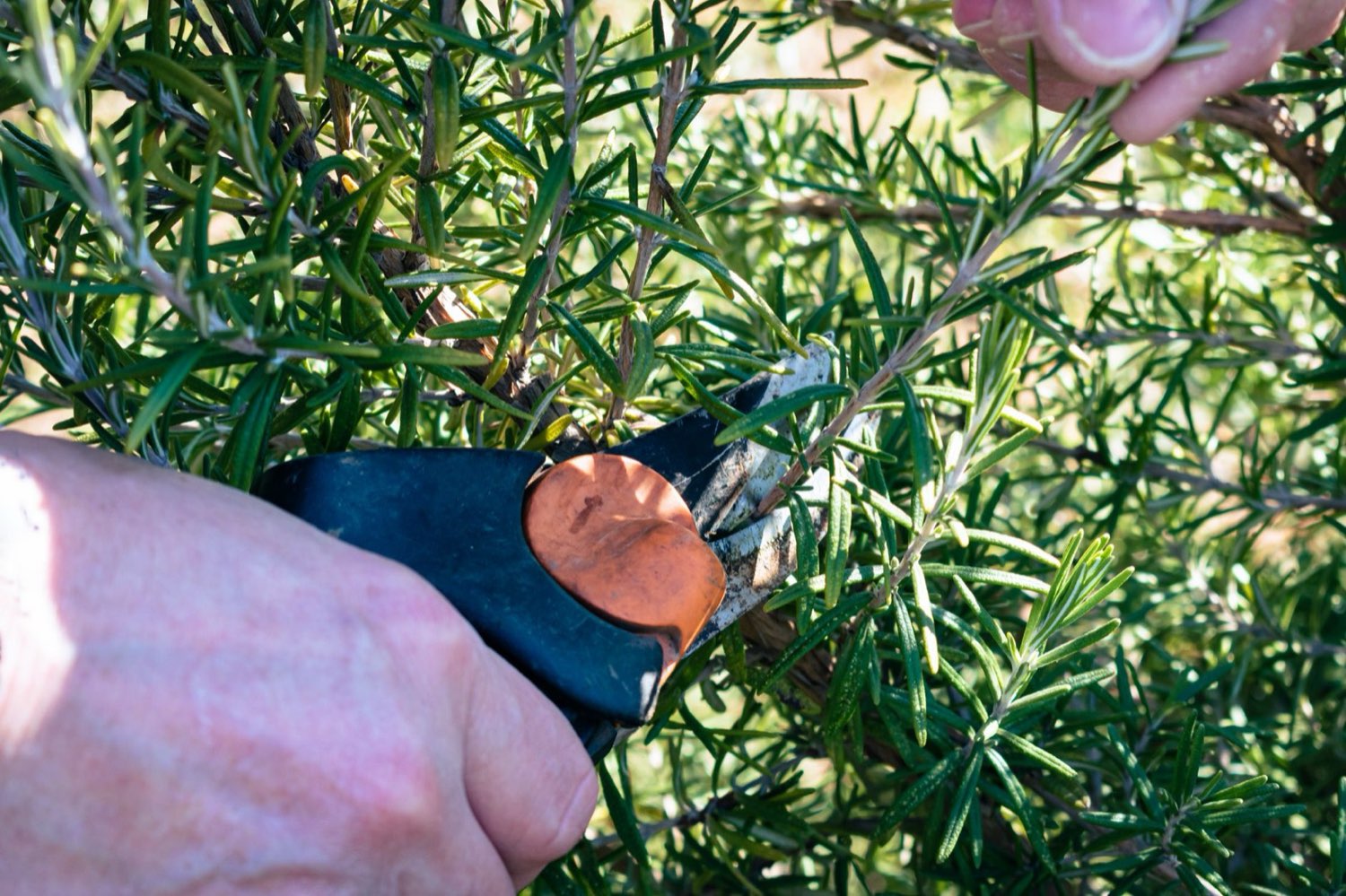
Topping removes the growing tip above a node, which forces the plant to send energy to the two shoots below it. One cola becomes two, and repeated topping multiplies from there.
FIM (“F’d I Missed”) is a partial cut of the same tip that can produce four shoots instead of two, but results are less consistent.
| Topping | FIM | |
|---|---|---|
| Cut | Clean, above a node | Partial — roughly 75% of the tip |
| Typical result | Two even colas | Three to four, uneven |
| Recovery | 3–7 days | Shorter |
| Predictability | High | Lower |
| Best for | Structured, even canopies | Maximum tops, less symmetry |
Timing matters. Top after the plant has at least four to five nodes, and stop topping well before the flip so the plant has time to recover.
SCROG
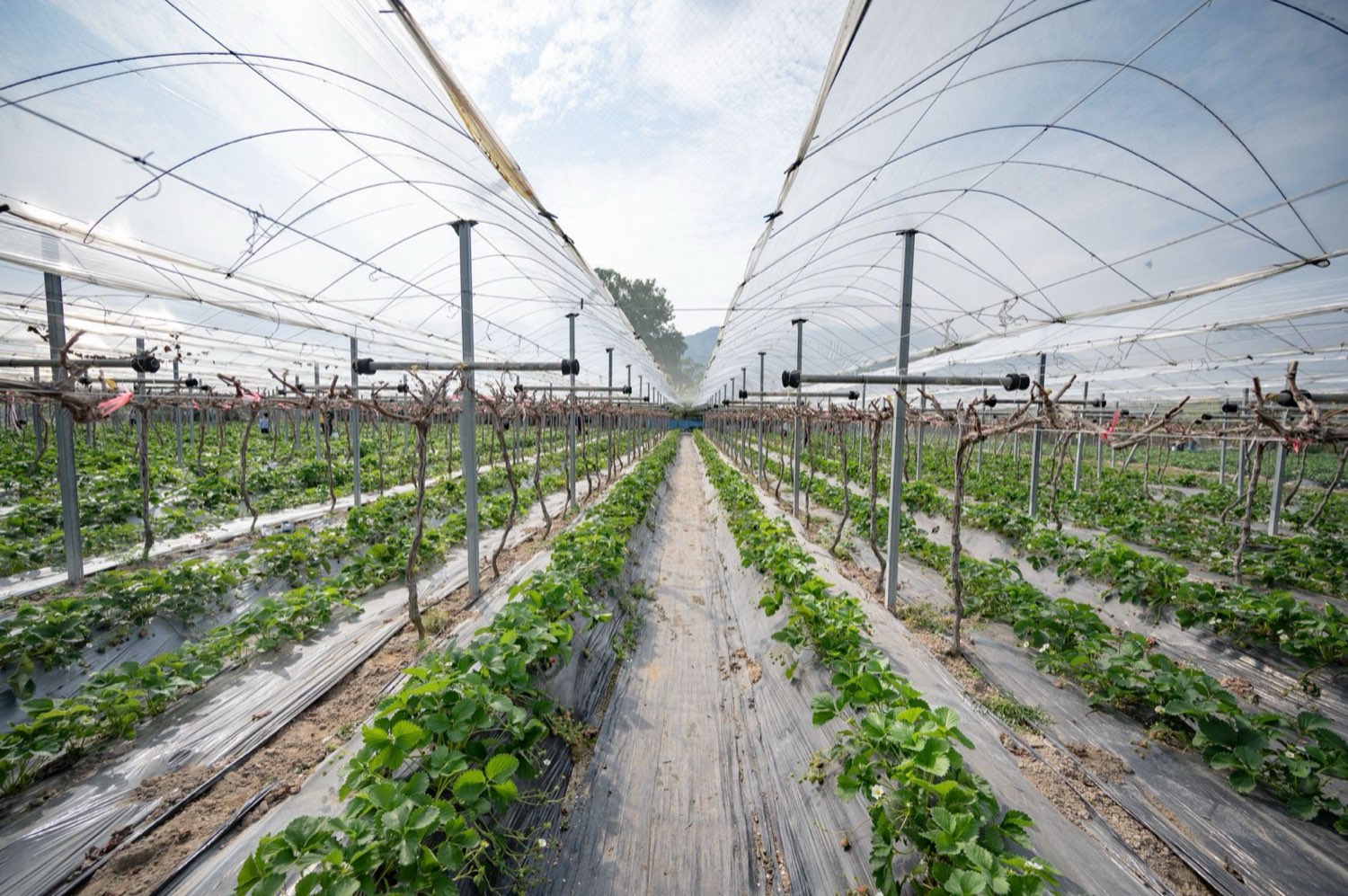
Screen of Green is LST with a trellis net doing the work. A horizontal screen sits above the plant and branches are tucked under and through it as they grow.
The screen forces a flat, even field of colas and then holds it there through flowering — which also solves the support problem when the flower gets heavy.
- Install the net early, before the canopy fills in.
- Tuck, do not force. Weave new growth under the screen every couple of days.
- Fill the screen before flipping. Roughly 70–80% coverage is a good trigger.
- Stop tucking once stretch ends; let the colas rise through.
Defoliation and Lollipopping
Defoliation improves light penetration and airflow, both of which matter enormously on dense cultivars grown without sterilizers.
It is also the technique most often overdone. Leaves are the plant’s engine, and stripping them sets growth back.
| Rule | Detail |
|---|---|
| Maximum at once | 20–30% of foliage |
| Best window | Early flower, weeks 1–3 |
| Stop after | Week 3 of flower |
| Target leaves | Interior and downward-facing, clearly blocking bud sites |
| Leave alone | Healthy fan leaves receiving direct light |
Lollipopping removes weak lower growth that would only produce airy, larfy flower. It concentrates the plant’s resources into the canopy where the light actually is. Do it just before the flip.
Combining Techniques
These are not alternatives. The standard indoor recipe stacks them.
- Top once or twice in early veg to create multiple colas.
- LST those colas outward to spread the canopy.
- Install a SCROG net and weave growth through it.
- Lollipop the understory just before flipping to flower.
- Defoliate lightly in weeks 1–3 of flower for light and airflow.
Each step compounds the last. Topping creates the colas, LST distributes them, the screen locks the field in place, and lollipopping stops the plant wasting energy below it.
Training Affects More Than Yield
An even canopy is not only about weight. It changes airflow, light distribution and therefore disease pressure.
That matters more when you grow without pesticides or sterilizers, as we do. A flat, open canopy with air moving through it is a preventative measure, not just a productivity one.
Oregon State University’s extension service publishes practical horticultural guidance on pruning and plant training that generalises well beyond any single crop.
- Environment: grow room temperature, humidity and VPD targets — a trained canopy changes airflow requirements.
- Feeding: cannabis nutrients and deficiency diagnosis — more canopy means more demand.
- Propagation: cloning in rockwool versus aeroponic systems — uniform clones train far more predictably.
- Finish: harvesting, drying and curing.
Our full training procedures are in the Lost Leaf plant training grow document, available individually or in the complete grow document package.
Frequently Asked Questions
What is the best cannabis training technique for beginners?
Low-stress training. It requires no cutting, carries almost no risk of setting the plant back, and typically adds 20–40% yield on its own.
When should I top cannabis plants?
Once the plant has four to five nodes, during vegetative growth. Stop topping well before flipping to flower so the plant has time to recover.
How much can I safely defoliate?
No more than 20–30% of foliage at once, focused on interior and downward-facing leaves that block bud sites. Stop after week three of flower.
Is SCROG better than LST?
SCROG is LST with a net enforcing the canopy, so it is an extension rather than an alternative. It generally produces the highest yield per light in a fixed footprint.
Can I train autoflowering plants?
Low-stress training yes, carefully. High-stress techniques like topping are riskier because autoflowers run on a fixed timeline and may not recover before flowering begins.
Common Training Mistakes
| Mistake | Consequence | Better approach |
|---|---|---|
| Topping too late | Plant flowers before recovering | Stop at least two weeks before the flip |
| Over-defoliating | Stalled growth, reduced yield | Stay under 20–30% at a time |
| Tying too tight | Stems girdle and snap | Soft ties, checked and loosened regularly |
| Installing the net late | Branches too rigid to weave | Screen goes up before the canopy fills |
| Training through stretch | Damaged flowering sites | Stop once stretch finishes |
The thread running through all of these is timing. Training is a vegetative-stage activity, and the window closes once the plant commits to flowering. Work with that window rather than against it and most of the difficulty disappears.
Educational content for adults 21+ growing legally in their jurisdiction. Check your local regulations before cultivating cannabis.