
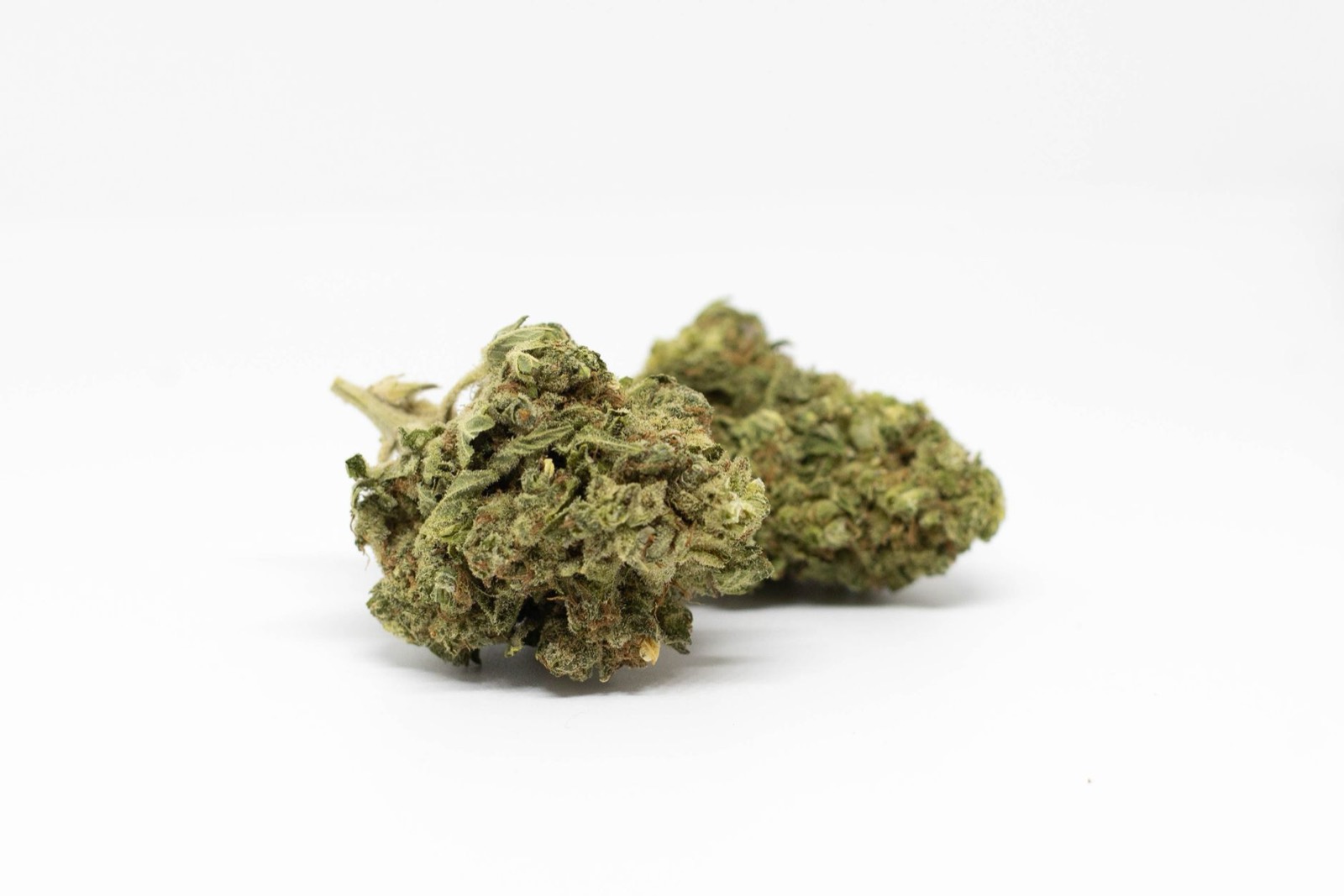
OG Kush is the most consequential cultivar in American cannabis after Chemdawg, and its genetics have never been confirmed. The most widely accepted account has it emerging from Chemdawg crossed with Lemon Thai and a Hindu Kush line, stabilised in 1990s Los Angeles by Josh D and Matt “Bubba” Berger.
Even major strain databases describe the parentage as supposed rather than documented, because like Chemdawg it started from bag seed. For a plant that shaped an entire coast’s idea of what cannabis should smell like, the paper trail is remarkably thin.
OG Kush at a Glance
| Attribute | Detail |
|---|---|
| Genetics | Chemdawg × Lemon Thai × Hindu Kush (widely accepted, unconfirmed) |
| Stabilised by | Josh D and Matt “Bubba” Berger, Los Angeles, 1990s |
| Type | Indica-leaning hybrid |
| Aroma | Earthy pine, lemon, fuel, skunk |
| Effect | Heavy, euphoric, deeply relaxing |
| Descendants | GSC, Fire OG, OGKB, Face Off OG and hundreds more |
| Significance | Defined the West Coast profile |
The Genetics Question
According to Josh D, one of the Los Angeles growers who stabilised it, OG Kush came from a Chemdawg selfed seed crossed with a Lemon Thai and Pakistani Kush hybrid.
Other accounts point to accidental pollination, or to secret cuts traded between trusted growers and never documented. Leafly lists it as Chemdawg crossed with Hindu Kush while acknowledging the uncertainty directly.
What is agreed is the Chemdawg ancestry. Everything sharp and fuel-driven about OG Kush comes from that side, and it is why OG and Sour Diesel feel like relatives despite their differences.
| Proposed parent | Contributes | Confidence |
|---|---|---|
| Chemdawg | Fuel, sharpness, potency | High — broadly agreed |
| Hindu Kush | Indica structure, earthiness, resin | Moderate |
| Lemon Thai | Citrus lift | Contested |
Cali Terpenes have a detailed write-up of the OG Kush history covering the competing accounts.
Storage and Freshness
OG profiles hold up reasonably well in storage. The pine and fuel notes persist where citrus fades, so an older OG jar reads earthier and heavier than a fresh one rather than losing character entirely. Sealed glass, cool and dark, as always.
What Does “OG” Mean?
This is disputed too, which is fitting for a cultivar whose entire history is contested.
- Original Gangster — a nod to its reputation and popularity in hip-hop culture.
- Ocean Grown — a claim that it was grown near the Pacific.
- Original Kush — the simplest reading, marking it as the reference plant.
None is settled. All three circulate, and the ambiguity has become part of the folklore.
Why It Mattered
OG Kush did for the West Coast what Sour Diesel did for the East. It set the expectation of what good cannabis smelled like for an entire region and generation.
More importantly, it became a breeding foundation. Crossed with Durban Poison it produced GSC, and GSC went on to produce most of the modern dessert catalogue.
| Descendant | Cross | Leads to |
|---|---|---|
| GSC | OG Kush × Durban Poison | Gelato, Sunset Sherbet, GMO, Animal Cookies |
| Fire OG | OG Kush × SFV OG | Animal Cookies |
| Face Off OG | OG Kush phenotype | Do-Si-Dos |
| OGKB | GSC-derived, OG-influenced | Do-Si-Dos |
Follow those forward and you reach nearly everything we grow. GSC is the crucial link, and Do-Si-Dos reaches our Moonbow cultivars through two separate OG routes.
OG Kush in Our Catalogue
| Lost Leaf cultivar | Route back to OG Kush |
|---|---|
| Cherry Limetta | Moonbow → Do-Si-Dos → OGKB and Face Off OG |
| Lou Bega | Moonbow → Do-Si-Dos → OGKB and Face Off OG |
| Sake Bomb | Gelato 33 → Sunset Sherbet → GSC → OG Kush |
| Baijiu | Garlic Cocktail → GMO → GSC → OG Kush |
Cherry Limetta and Lou Bega carry the heaviest OG influence, which is where the weight in both of them comes from.
The Kush Half
Hindu Kush is the other side of the widely accepted account, and it is worth understanding what a Kush landrace contributes.
Kush populations adapted to the mountainous regions along the Afghanistan-Pakistan border — short, broad-leaved, fast-flowering plants with dense resinous flower and earthy, hashy aromatics. They are the archetypal indica in the botanical sense.

That structure is what pulled OG Kush away from its Chemdawg parent. Chemdawg is tall and stretchy; OG is denser and heavier, and the Kush side is why.
Growing OG Genetics
OG lines have a reputation for being demanding, and it is deserved.
- Sensitive to overfeeding. OG plants sulk when pushed harder than they want.
- Structure needs support. Long branches, heavy colas.
- Moderate yields. These are flavour plants, not weight plants.
- Strong odour. Fuel profiles announce themselves early.
Our nutrients guide covers feeding sensitive genetics and plant training covers supporting long branches.
Why OG Lost Ground
OG Kush is still grown everywhere, but it no longer defines the market the way it did. The reasons are the familiar commercial ones.
| Factor | OG Kush | Modern dessert cultivar |
|---|---|---|
| Yield | Moderate | High |
| Feeding tolerance | Sensitive | Forgiving |
| Structure | Long branches, needs support | Compact |
| Bag appeal | Good | Excellent |
| Consumer familiarity | High but dated | Current |
None of that reflects on quality. A well-grown OG remains one of the best things in cannabis, and the profile is distinctive in a way that a great many contemporary cultivars are not.
The OG Family
What OG Kush lost as a product it more than made up for as a parent. The descendant list is close to unmatched.
| Cultivar | Relationship | Where it leads |
|---|---|---|
| Fire OG | OG Kush × SFV OG | Animal Cookies, then Zookies |
| Face Off OG | Selected OG phenotype | Do-Si-Dos, then Moonbow |
| OGKB | GSC-derived, OG-influenced | Do-Si-Dos |
| GSC | OG Kush × Durban Poison | Gelato, Sunset Sherbet, GMO |
That means OG Kush reaches our catalogue by at least three separate routes. Animal Cookies via Fire OG, Do-Si-Dos via Face Off OG and OGKB, and GSC directly.
Buying OG Today
OG Kush is grown everywhere and the name is applied loosely. A great deal of what is labelled OG on menus has only distant OG heritage.
Ask who grew it and what the terpene profile is rather than trusting the name. Our craft cannabis buyer’s guide covers the questions worth asking.
Frequently Asked Questions
What are OG Kush genetics?
Most commonly given as Chemdawg crossed with Lemon Thai and a Hindu Kush line, though the parentage has never been confirmed. It originated from bag seed.
What does OG stand for?
It is disputed. Original Gangster, Ocean Grown and Original Kush all circulate, and none is settled.
Who created OG Kush?
It was stabilised in 1990s Los Angeles, most often credited to Josh D and Matt “Bubba” Berger.
What strains come from OG Kush?
GSC most importantly, plus Fire OG, Face Off OG and OGKB. Through GSC it is an ancestor of Gelato, Sunset Sherbet and GMO.
What does OG Kush smell like?
Earthy pine and lemon over a fuel and skunk base. It is one of the defining aromas in cannabis.
Educational content for adults 21+ in legal jurisdictions. Lost Leaf flower is available only through licensed Michigan provisioning centres.
Related reading: Hindu Kush, one of its proposed parents. Fire OG, its strongest descendant.