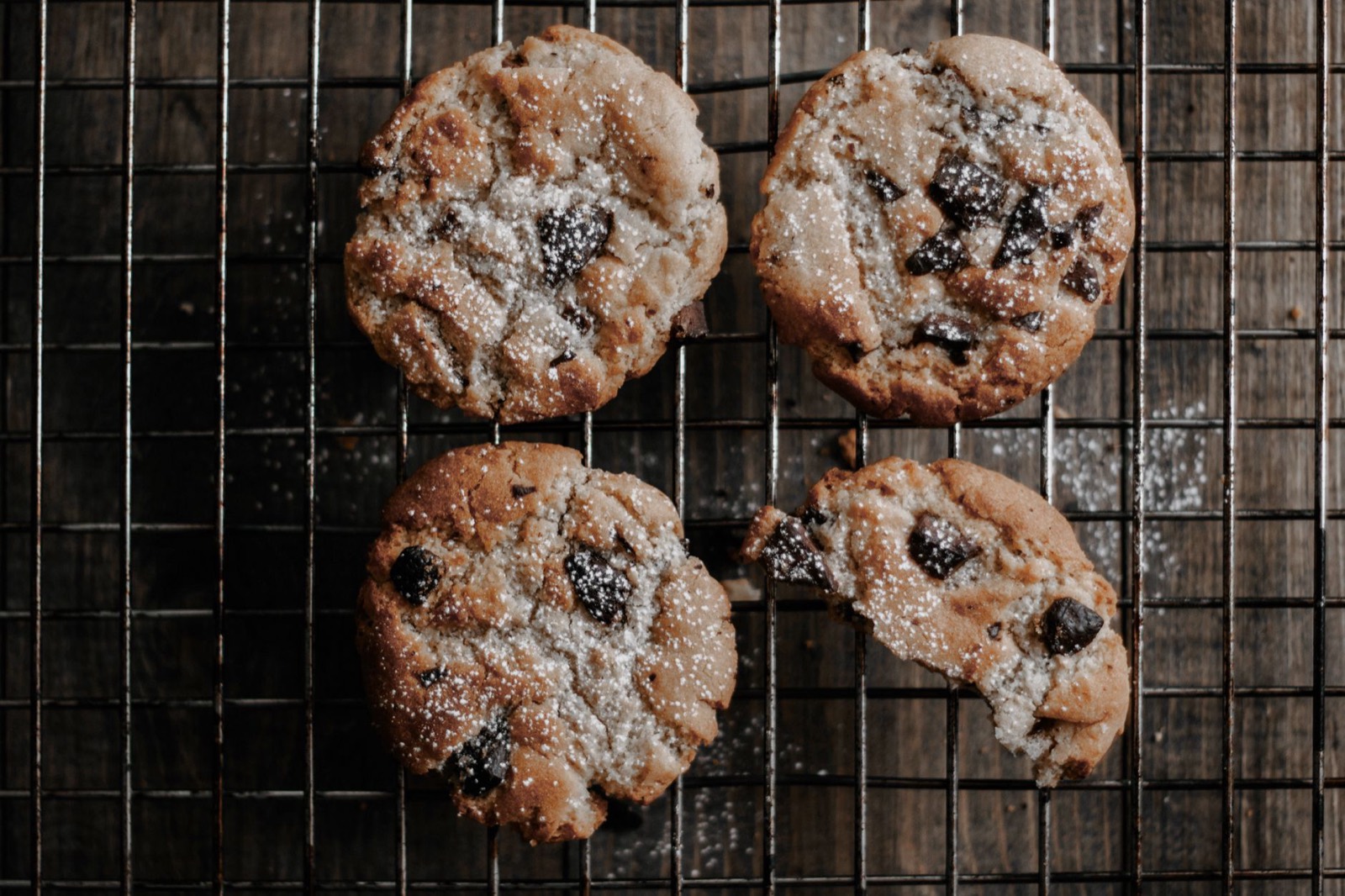
Girl Scout Cookies, now usually sold as GSC, is a cross of OG Kush and Durban Poison bred by the Cookie Fam in the San Francisco Bay Area around 2012. It is roughly 60% indica, and it is almost certainly the single most influential cannabis cultivar of the last fifteen years.

Nearly every cultivar in our catalogue traces back to it. So does most of what is on any dispensary shelf in America.
GSC at a Glance
| Attribute | Detail |
|---|---|
| Genetics | OG Kush × Durban Poison |
| Breeders | Cookie Fam, San Francisco Bay Area |
| Created | Around 2012 |
| Indica / sativa | Approximately 60 / 40 |
| Aroma | Sweet mint, cookie dough, earthy fuel |
| Structure | Dense, frosty, heavily resinous |
| Effect | Euphoric then relaxing, balanced |
| Legacy | Parent of Gelato, Sunset Sherbet, Wedding Cake and hundreds more |
Where the Flavour Came From
The cross is unusual because the parents are so unlike each other. OG Kush is indica-leaning, earthy, piney and fuel-forward. Durban Poison is a pure African sativa, sweet and energetic.
OG Kush passed on the earthy, musky fuel undertones and much of the potency. Durban Poison contributed sweetness and lift. Where they meet is the thin-mint, cookie-dough character that basically defines GSC and everything descended from it.
| Parent | Type | Contributed |
|---|---|---|
| OG Kush | Indica-leaning | Earthy pine, fuel undertones, potency, density |
| Durban Poison | Pure sativa (South Africa) | Sweetness, energy, uplift |
| GSC | Hybrid ~60/40 | Mint-cookie sweetness over an earthy base |
This GSC strain overview covers the cultivar’s characteristics and cultivation profile in more detail.
The Name Change
The strain was named for its sweet, cookie-like aroma. The Girl Scouts of the USA took a different view and issued a cease-and-desist over the trademark.
The breeders responded by shortening it. In legal markets it is now almost always listed simply as GSC, which is why you see both names used for the same plant.
Why It Changed Everything
GSC arrived at a moment when the American market was still dominated by fuel and haze profiles. It offered something genuinely different: dessert sweetness with real potency and exceptional bag appeal.
Commercially that combination was unbeatable. Growers wanted it, consumers wanted it, and breeders immediately started crossing it into everything.
| Descendant | Cross | Significance |
|---|---|---|
| Sunset Sherbet | GSC × Pink Panties | Parent of Gelato, Sherbanger, Rainbow Chip |
| Gelato | Sunset Sherbet × Thin Mint GSC | The dessert benchmark |
| Animal Cookies | GSC × Fire OG | Parent of Zookies |
| OGKB | GSC-derived phenotype | Parent of Do-Si-Dos |
| GMO | Chemdawg × GSC | The savoury outlier |
| Wedding Cake | Cherry Pie × GSC | Modern menu staple |
Look at that list and you have most of modern cannabis. Four of those six lines appear directly in our own catalogue.
GSC in Our Catalogue
We do not grow GSC. We grow its descendants, and almost all of them.
| Lost Leaf cultivar | Route back to GSC |
|---|---|
| Sake Bomb | Gelato 33 and Sherbanger — both via Sunset Sherbet |
| Pandemonium | Sherbanger — via Sunset Sherbet |
| Cherry Limetta | Moonbow — via Do-Si-Dos and OGKB |
| Lou Bega | Moonbow — via Do-Si-Dos and OGKB |
| Baijiu | Garlic Cocktail — via GMO |
The chain runs through Sunset Sherbet for the dessert cultivars, Do-Si-Dos for the Moonbow line, and GMO for the savoury branch. Gelato 33 and Sherbanger are both one step further down.
The Durban Poison Half
Durban Poison deserves more credit than it gets in this story. It is a pure South African landrace sativa, energetic and sweet, and it is genetically about as far from OG Kush as cannabis gets.
Crossing something that distant is a gamble. Most such crosses produce muddled offspring rather than something coherent. GSC came out the other way, and the mint note that defines the family exists only because those two very different plants met.
The Structural Legacy
Flavour gets the attention, but GSC changed how cannabis looks as much as how it tastes.
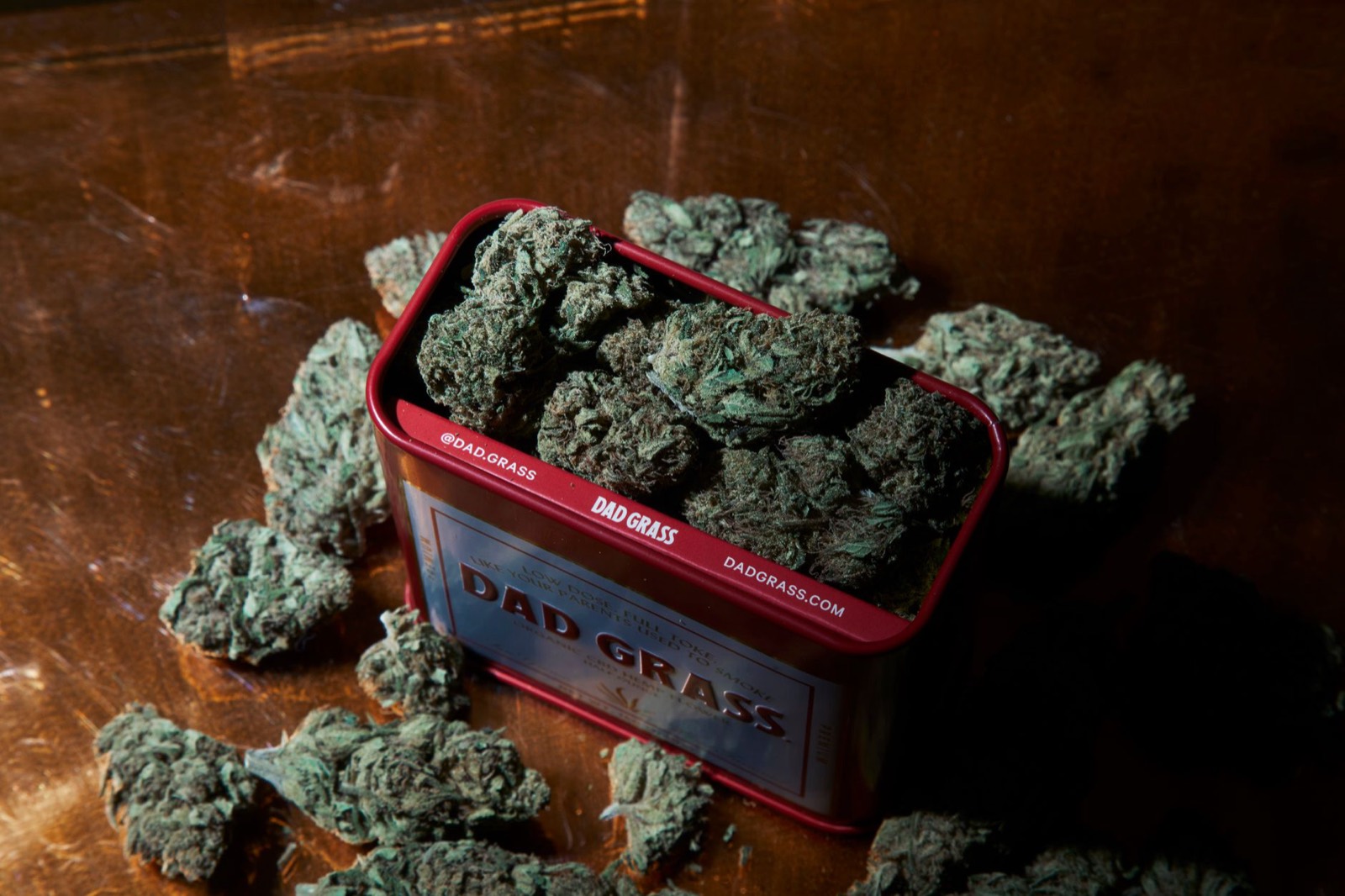
It produces dense, tight, heavily frosted flower with strong colour expression. That became the commercial standard for bag appeal, and it is why so much modern flower shares a family resemblance regardless of what it is called.
- Density: tight, compact bud structure
- Resin: heavy trichome coverage
- Colour: anthocyanin expression in cool finishes
- Trim: high calyx-to-leaf ratio
Growing GSC-Line Genetics
The density that makes these cultivars attractive is also their main cultivation risk.
- Airflow is non-negotiable. Tight flower in still air invites botrytis.
- Watch late-flower humidity. Dense colas hold moisture internally.
- Feed conservatively. The sweet notes fade first under heavy nitrogen.
- Cure patiently. Mint and cookie notes develop over weeks in glass.
Our grow room climate guide and integrated pest management guide cover managing dense canopies without sterilizers, and the harvest and cure walkthrough covers the finish.
The Cookie Fam
GSC did not come from a seed company. It came from a Bay Area collective known as the Cookie Fam, including cultivator Jai “Jigga” Chang and the rapper Berner.
That matters because it is a genuinely different origin story from most foundational cultivars. GSC was built inside a culture rather than a breeding programme, and it spread through reputation and clone-sharing long before it was ever commercially available.
The Cookies brand that grew out of it became one of the largest in American cannabis. Few plants have generated an entire company.
A Decade On
Foundational cultivars usually fade from menus even as their descendants thrive. GSC has partly avoided that — it is still widely grown and still sells.
Part of the reason is that it genuinely holds up. The profile that felt revolutionary in 2013 is now the baseline expectation, but the original still delivers it well.
Buying GSC Today
GSC is grown at every scale, and the name alone tells you very little. Ask who grew it, when it was harvested, and what the terpene profile looks like.
A well-grown GSC remains genuinely excellent more than a decade on. A commodity version is unremarkable. Our Michigan craft cannabis buyer’s guide covers how to tell the difference at the counter.
Frequently Asked Questions
What are Girl Scout Cookies genetics?
GSC is a cross of OG Kush and Durban Poison, bred by the Cookie Fam in the San Francisco Bay Area around 2012.
Why is it called GSC now?
The Girl Scouts of the USA issued a cease-and-desist over the name. Breeders shortened it to GSC, which is how it appears in most legal markets.
Is GSC indica or sativa?
It is an indica-dominant hybrid, roughly 60% indica and 40% sativa, though the effect is generally described as balanced.
What does GSC taste like?
Sweet mint and cookie dough over an earthy, slightly fuel-like base. The mint comes from where OG Kush and Durban Poison meet.
Which strains come from GSC?
Sunset Sherbet, Gelato, Animal Cookies, OGKB, GMO and Wedding Cake among many others. Most modern dessert cultivars trace back to it.
Educational content for adults 21+ in legal jurisdictions. Lost Leaf flower is available only through licensed Michigan provisioning centres.
Related reading: The OG Kush parent profile. Durban Poison, the other GSC parent.
Related reading: The Kush landrace in the OG Kush line.